
About chikungunya
Not heard of chikungunya? You are not alone.1 But, with symptoms that can last for months or even years, it’s worth knowing how to protect yourself.2,3
What is chikungunya?
Chikungunya is caused by a virus (chikungunya virus or CHIKV) and despite being one of the most commonly contracted viral diseases spread by mosquitoes, it is not well known.1,4 It has similar symptoms to other mosquito-borne illnesses, such as Zika and dengue, and can often be mistaken for them.4-8
The name “chikungunya” means “to become contorted” in Kimakonde, an East African language, representing how symptoms such as joint pain can affect people.9
How is chikungunya spread?
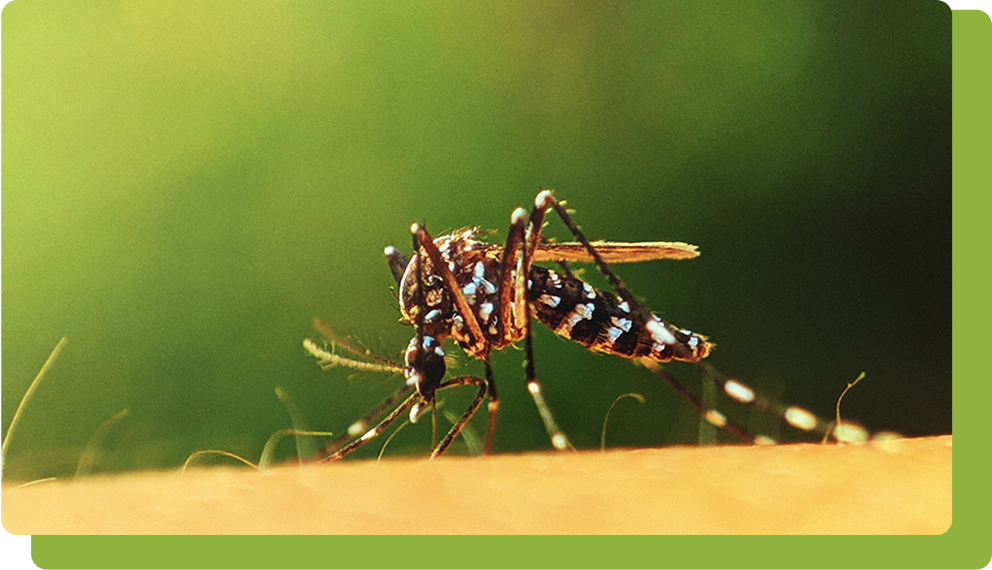
People can become infected with chikungunya when they are bitten by a mosquito carrying the virus.9 It is spread by two types of mosquitoes that bite more aggressively during the day.5 Mosquitoes pick up the virus by biting an infected person and passing it on to anyone else they bite.9

Is chikungunya contagious?
An infected person cannot give chikungunya directly to another person through coughing, sneezing, or touching.10 However, if a pregnant person is infected at the time of giving birth, the baby can become infected, often resulting in severe disease.10

Mosquitoes that carry the virus
There are two main types of mosquitoes that can carry chikungunya.5
Both are a type of Aedes mosquito that bite more aggressively in the daytime.5
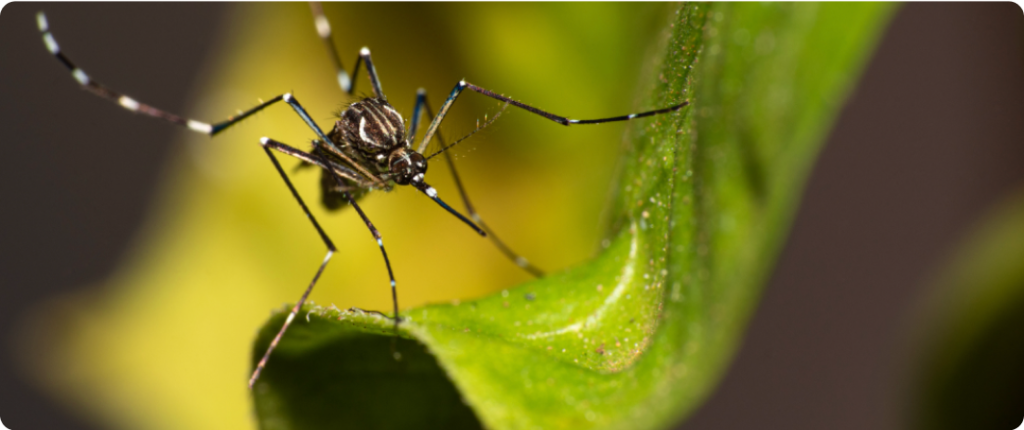
Aedes aegypti 11
Known as the “yellow fever mosquito,” Aedes aegypti lives in more urbanized areas, in plant pots and other containers. It’s more likely to feed and rest indoors.
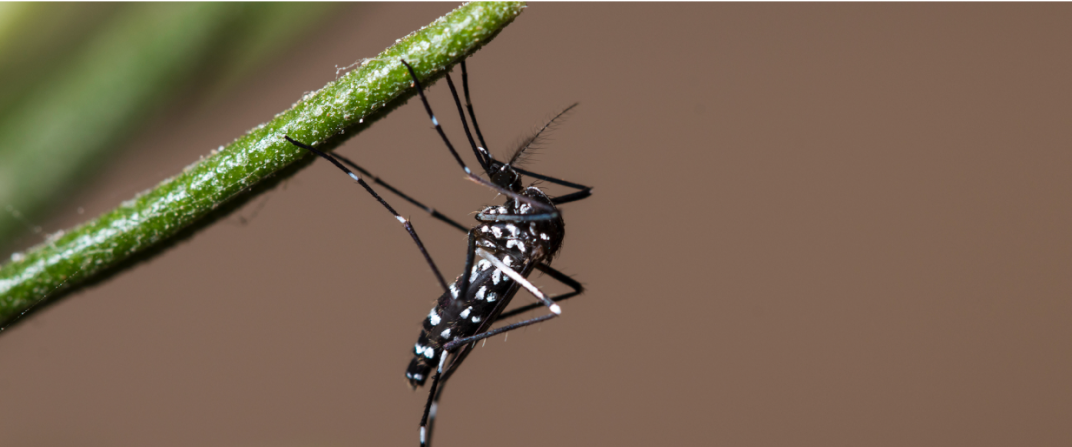
Aedes albopictus12
Known as the “Tiger mosquito,” Aedes albopictus is a “treehole” mosquito, living in more rural areas.
Where are these mosquitoes found?
Aedes mosquitoes are usually found in tropical and subtropical climates.5 Due to climate change, these mosquitoes are spreading farther into areas such as South America, Central Africa, Southeast Asia, and even parts of the southern US.13–17 And, as they’re found in both urban and rural areas, avoiding them can be difficult when you’re traveling.18,19
To find out if you need to plan protection for your travel destinations, see our map showing areas where chikungunya has been reported.

Mosquitoes in the daytime?
Yes! You may only have heard of mosquitoes that bite at night—that annoying buzz around your pillow—but the mosquitoes that spread chikungunya usually bite during the day.5
This means it’s hard to avoid them. Just sleeping under a mosquito net at night is unlikely to give you enough protection.5 But you don’t need to let chikungunya stop your travels. Find out about practical ways to help prevent chikungunya.

My chikungunya story
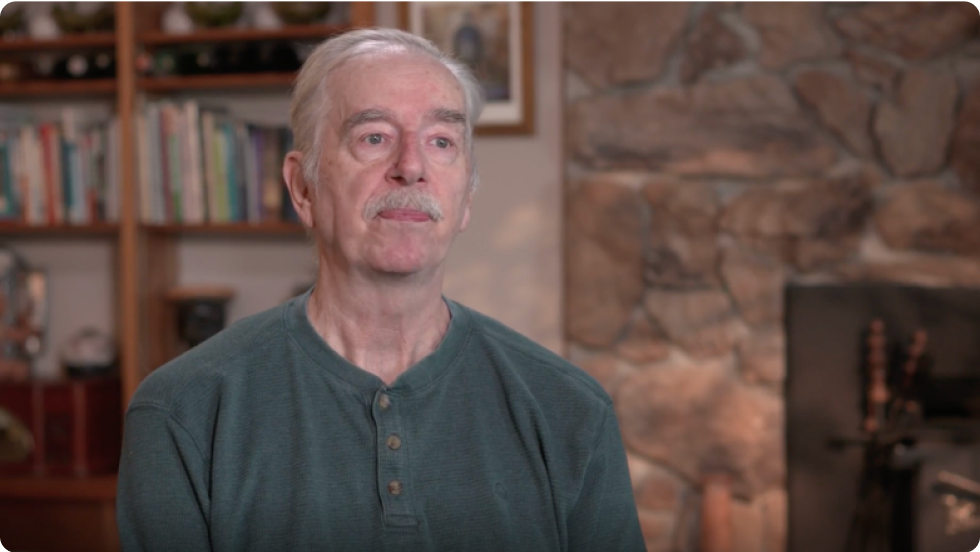
Lorren shares his experience with the long-term effects of chikungunya. Watch his story here.

1. Simon F, et al. Chikungunya: risks for travellers. J Travel Med. 2023;30(2):taad008.
2. Rama K, et al. Clinical outcomes of chikungunya: a systematic literature review and meta-analysis. PLoS Negl Trop Dis. 2024;18(6):e0012254.
3. Puntasecca CJ, et al. Measuring the global burden of chikungunya and Zika viruses: a systematic review. PLoS Negl Trop Dis. 2021;15(3):e0009055.
4. Salam N, et al. Global prevalence and distribution of coinfection of malaria, dengue and chikungunya: a systematic review. BMC Public Health. 2018;18(1):710.
5. Chikungunya. World Health Organization. Updated April 14, 2025. Accessed October 9, 2025. https://www.who.int/news-room/fact-sheets/detail/chikungunya
6. Rico-Mendoza A, et al. Co-circulation of dengue, chikungunya, and Zika viruses in Colombia from 2008 to 2018. Rev Panam Salud Publica. 2019;43:e49.
7. Shukla A, et al. Long-term neurodevelopmental outcomes of neonatal chikungunya: follow-up of a series of cases till 1 year. J Trop Pediatr. 2021;67(3):fmaa053.
8. Faria BS, et al. Vertical transmission of chikungunya virus: a worldwide concern. Braz J Infect Dis. 2024;28(3):103747.
9. Mourad O, et al. Chikungunya: an emerging public health concern. Curr Infect Dis Rep. 2022;24(12):217–228.
10. Chikungunya: causes and how it spreads. Centers for Disease Control and Prevention. January 30, 2025. Accessed October 9, 2025. https://www.cdc.gov/chikungunya/causes-and-spread/index.html
11. Aedes aegypti – factsheet for experts. European Centre for Disease Prevention and Control. Accessed October 9, 2025. https://www.ecdc.europa.eu/en/disease-vectors/facts/mosquito-factsheets/aedes-aegypti
12. Aedes albopictus – factsheet for experts. European Centre for Disease Prevention and Control. Accessed October 9, 2025. https://www.ecdc.europa.eu/en/disease-vectors/facts/mosquito-factsheets/aedes-albopictus
13. Yactayo S, et al. Epidemiology of chikungunya in the Americas. J Infect Dis. 2016;214(suppl 5):S441–S445.
14. Factsheet for health professionals about chikungunya virus disease. European Centre for Disease Prevention and Control. Accessed October 9, 2025. https://www.ecdc.europa.eu/en/chikungunya/facts/factsheet
15. Chikungunya fever in EU/EEA. European Centre for Disease Prevention and Control. Accessed October 9, 2025. https://www.ecdc.europa.eu/en/chikungunya/threats-and-outbreaks/chikungunya-fever-eueea
16. Chikungunya fact sheet. The World Mosquito Program. Accessed October 9, 2025. https://www.worldmosquitoprogram.org/sites/default/files/2023-08/WMP%20chikungunya.pdf
17. Fischer D, et al. Climate change effects on chikungunya transmission in Europe: geospatial analysis of vector’s climatic suitability and virus’ temperature requirements. Int J Health Geogr. 2013;12:51.
18. Li Y, et al. Urbanization increases Aedes albopictus larval habitats and accelerates mosquito development and survivorship. PLoS Negl Trop Dis. 2014;8(11):e3301.
19. Weaver SC, Reisen WK. Present and future arboviral threats. Antiviral Res. 2010;85(2):328-345.